
Journal
The Emptiness We Chose: What Minimalism Really Tells Us About How We Live
Minimalism has become one of the defining aesthetics of the twenty-first century, and yet the word itself has lost almost all meaning. A deep dive into what the movement got right, what it obscured, and why the most interesting homes belong to neither camp.
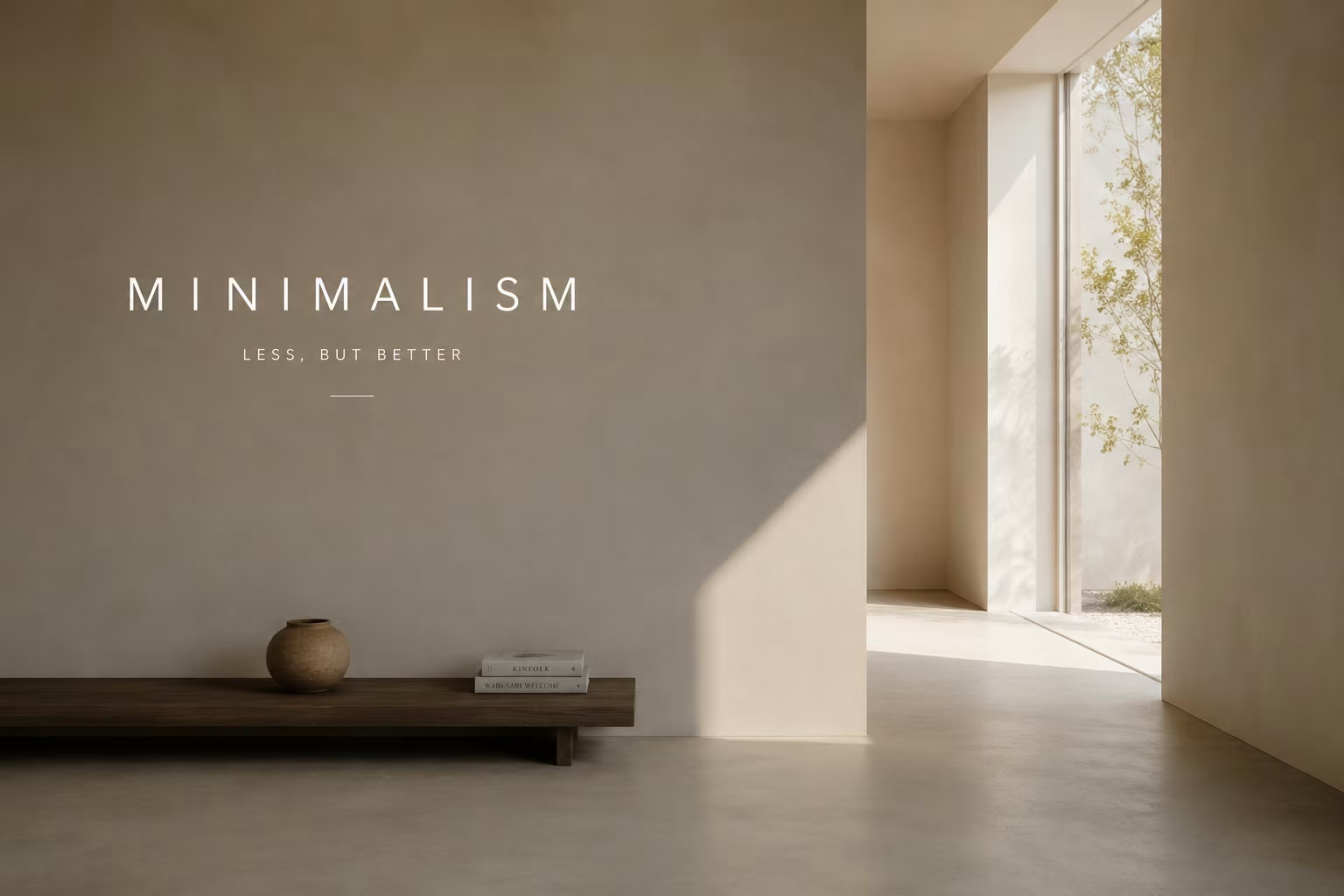
There is a particular kind of silence that fills a room with almost nothing in it. Not the silence of absence, but the silence of intention. You know it when you walk into it: the single Noguchi table, the unbleached linen curtain moving slightly in a draft you didn’t notice before, the white wall that seems to breathe. The room is asking you to slow down. It is also asking you to admire whoever chose to live this way.
Minimalism has become one of the defining aesthetics of the twenty-first century, and yet the word itself has lost almost all meaning. It describes a gallery in Chelsea and a capsule wardrobe on Instagram. It describes Tadao Ando’s concrete churches and a $40 scented candle in a beige ceramic vessel sold by a direct-to-consumer brand. It describes Donald Judd’s aluminium boxes in Marfa, Texas, and a productivity influencer’s empty desk. The term covers so much ground that it has become nearly useless, which is precisely why it is worth looking at again.
Where the Emptiness Began
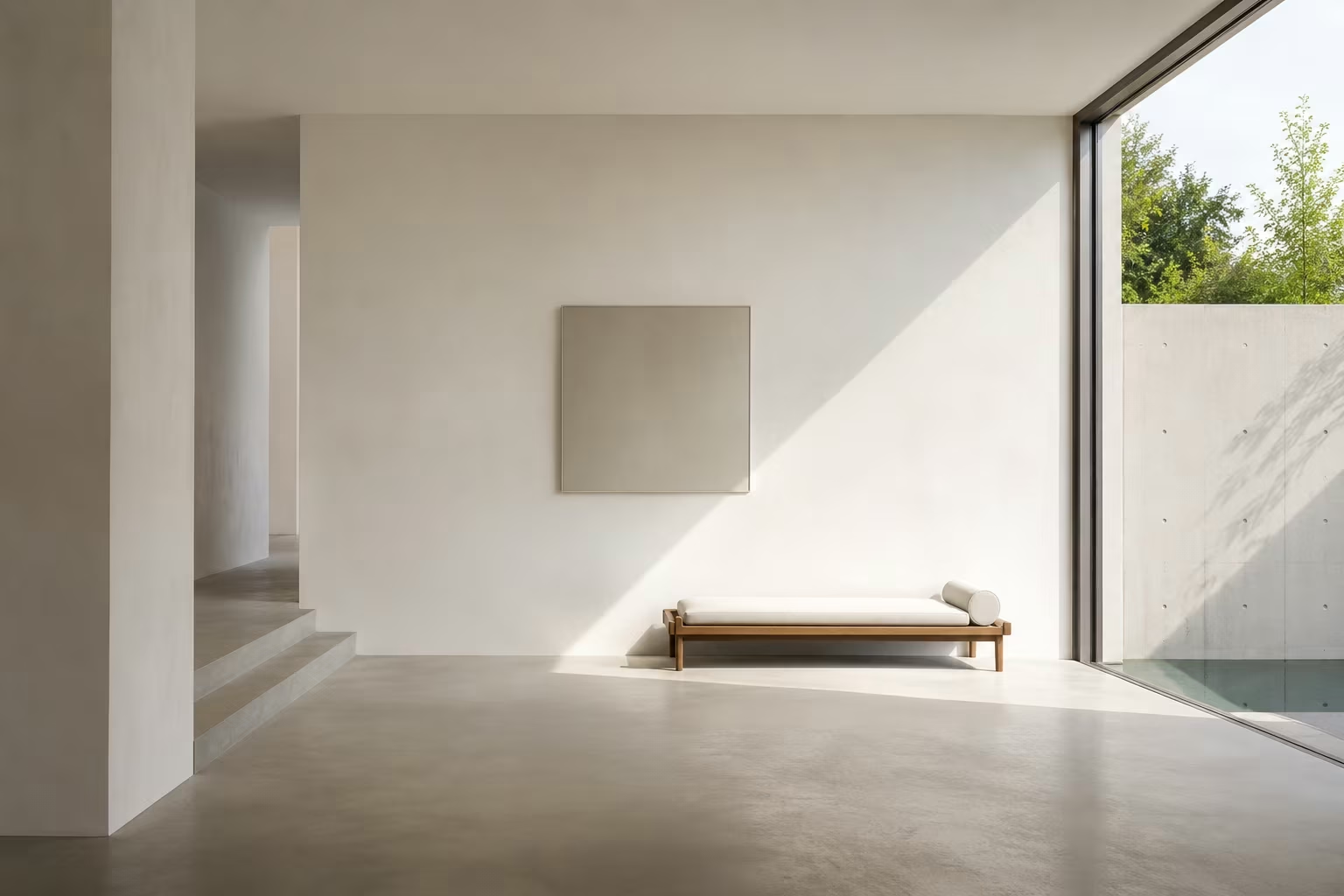
The word “minimalism” was not born in architecture or interior design. It was a critical insult. When the composer Steve Reich, the sculptor Carl Andre, and the painter Frank Stella started stripping their work down to raw structure in the 1960s, critics used “minimal” as a dismissal. Too little. Not enough. The implication was that something was missing.
But the artists leaned into it. Judd placed identical aluminium boxes at regular intervals on a gallery floor and called it sculpture. Dan Flavin installed fluorescent tubes in corners and let the light become the work. Sol LeWitt reduced drawing to a set of written instructions. These were not acts of laziness. They were radical reductions, and the power came precisely from what had been removed.
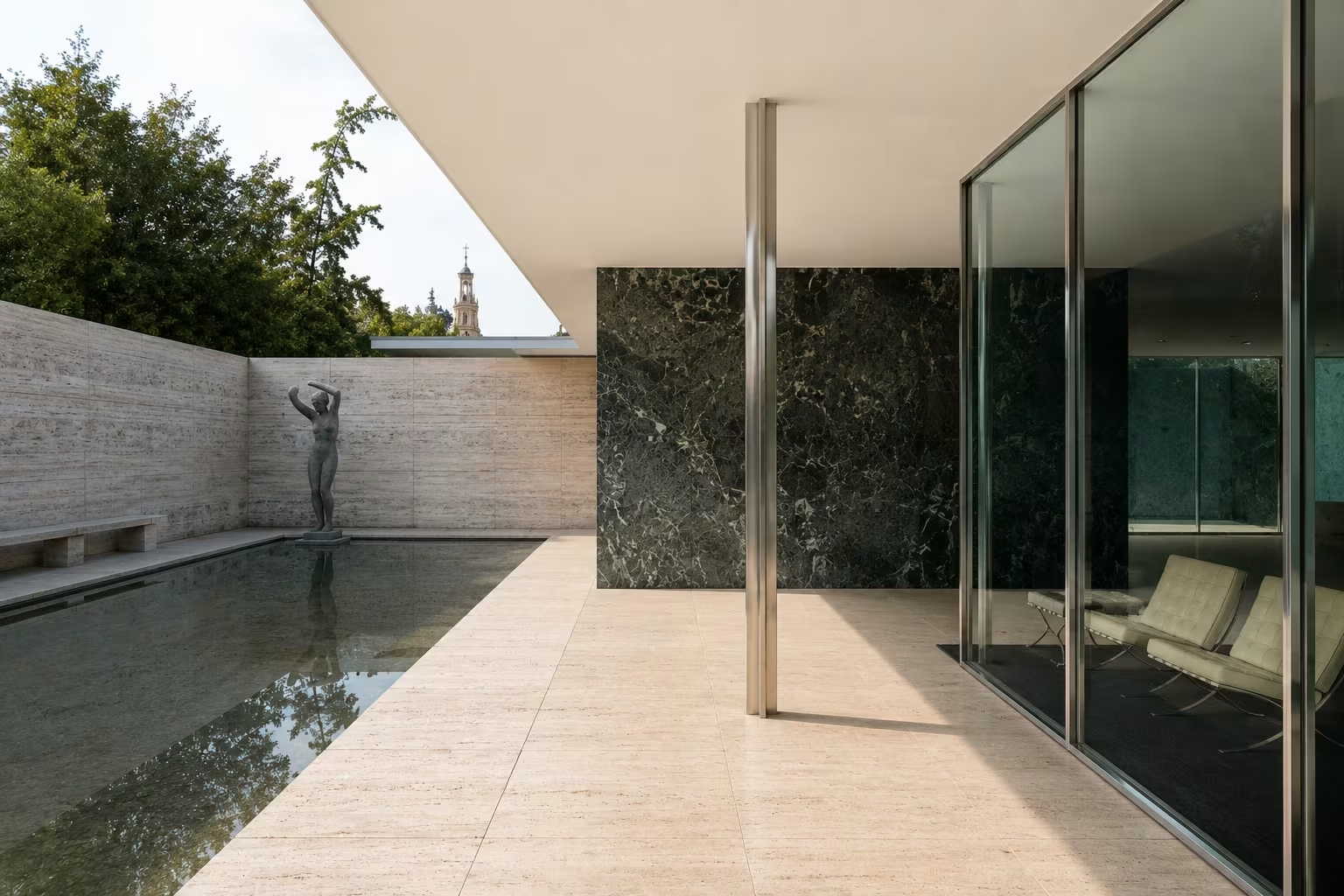
What followed in architecture and design was less a direct inheritance and more a parallel impulse. Mies van der Rohe had already said “less is more” decades earlier, of course, and his Barcelona Pavilion of 1929 remains a masterclass in the emotional weight of empty space: travertine, glass, steel, and the deliberate refusal to fill the frame. But the minimalism that would eventually flood residential interiors owed as much to Japanese aesthetics as to German rationalism.
Tadao Ando’s Church of the Light in Ibaraki, completed in 1989, is a concrete box sliced by a cruciform opening that lets daylight pour through the walls. The space is almost brutal in its austerity. And yet people weep when they enter it. The room proves something that the wellness industry has since monetised relentlessly: that emptiness, when handled with precision, is one of the most emotionally potent things you can build.
The Scandinavian Filter
For most people, minimalism did not arrive through art galleries or concrete churches. It arrived through IKEA.
This is not a criticism. The Scandinavian contribution to minimalist interior design was transformative precisely because it was democratic. When Alvar Aalto designed Stool 60 in 1933, bent from a single piece of birch plywood using a technique he had spent years perfecting, the idea was simple: good design should not be a luxury. His wife Aiva said as much when Artek was founded in Helsinki. Beautiful, functional objects for ordinary homes.
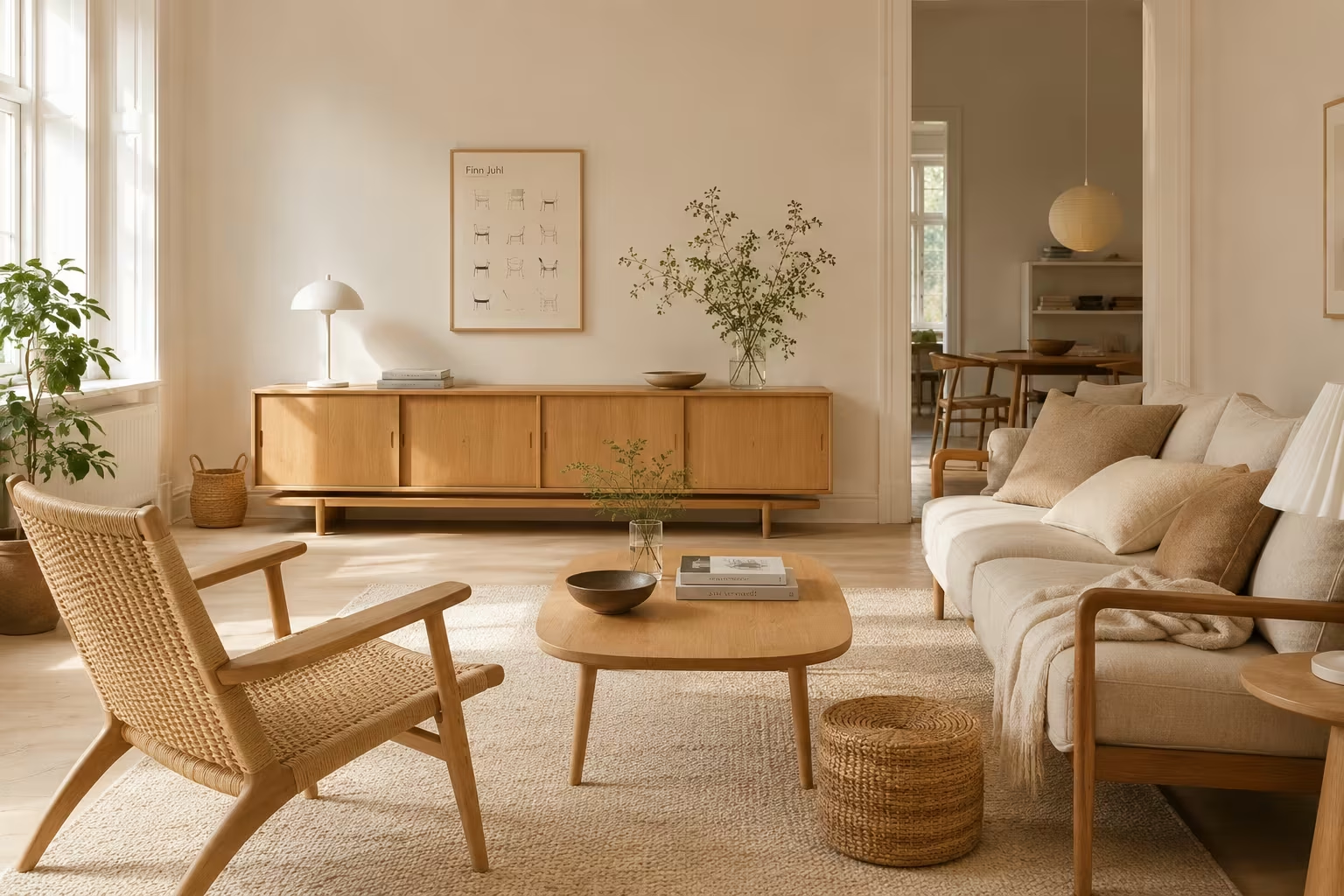
That ethos passed through decades of Nordic design culture and eventually became what the internet now calls “Scandinavian minimalism”: pale wood, white walls, wool throws draped over the arm of a Hans Wegner Shell Chair, candles on a dining table you can actually eat at. It is comfortable minimalism. It asks nothing painful of you. You can have three children and a dog and still be minimalist, as long as your shelving is tidy and your colour palette stays within the warm neutral range.
The genius of this Scandinavian filter was that it made minimalism feel like a lifestyle choice rather than an ideological commitment. You did not need to read Robert Morris or understand phenomenology. You just needed a Kallax shelf unit and a pair of Muuto pendants.
The Marie Kondo Inflection
Then came Marie Kondo, and minimalism became a verb.
The Life-Changing Magic of Tidying Up was published in Japan in 2011 and translated into English in 2014. Within two years it had sold millions of copies worldwide, and “does it spark joy?” had become the most repeated domestic question since “where did I put the remote?” Kondo’s method was simple and theatrical: hold every object you own, ask whether it brings you genuine happiness, and if it does not, thank it and let it go.
The cultural impact was enormous. Charity shops reported surges in donations. Storage companies panicked. A whole genre of “decluttering” content exploded on YouTube, where creators filmed themselves throwing things away with the kind of emotional catharsis previously reserved for confessional videos.
What made Kondo’s approach interesting was not the reduction itself but the animism behind it. She treated objects as if they had feelings. You did not just discard a chipped mug; you expressed gratitude for its service. This was wabi-sabi translated into self-help, and it struck a nerve in a culture drowning in possessions it had bought impulsively and felt vaguely guilty about.
The psychological appeal was obvious. Clutter produces cortisol. Visual noise makes decision-making harder. Studies from UCLA’s Center on Everyday Lives and Families had already shown that people living in cluttered homes had measurably higher stress hormone levels. Kondo gave people permission to remove the physical evidence of their overconsumption, and the relief was real.
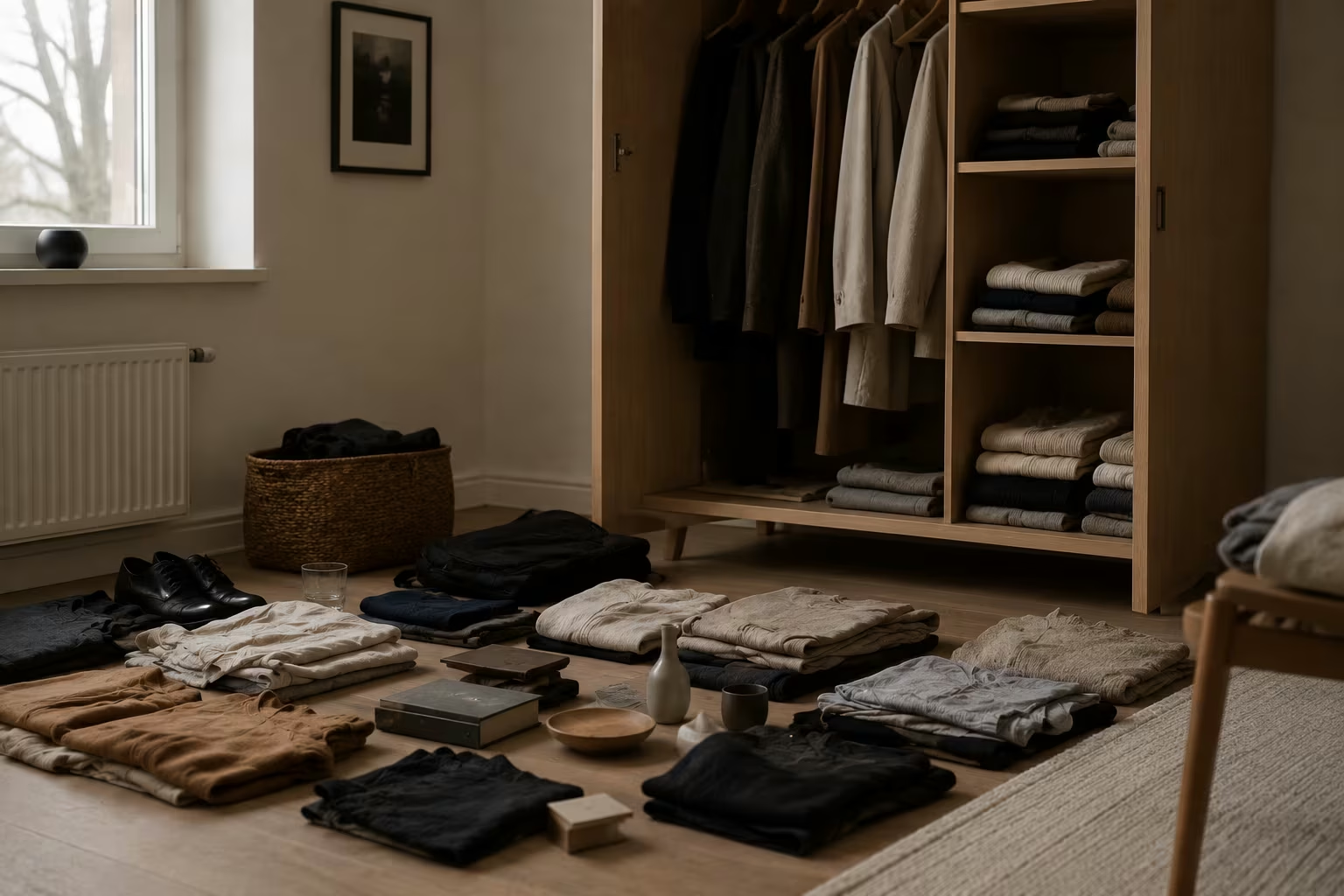
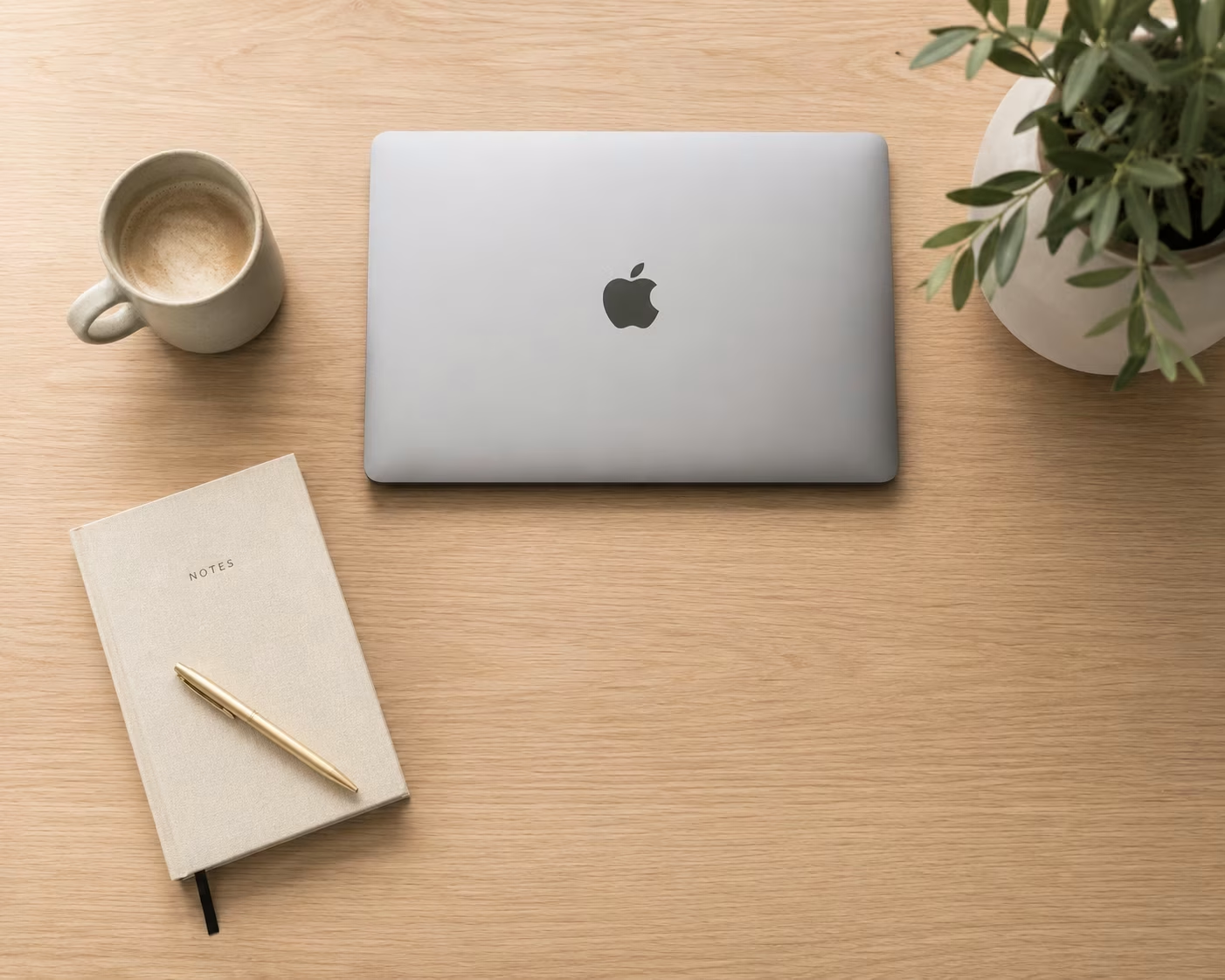
But there was something else happening beneath the surface. Decluttering became a form of moral performance. The person who owned less was not just less stressed. They were better. More disciplined. More intentional. The Instagram flat-lay of a near-empty desk with a single notebook, a ceramic mug, and a MacBook became a status symbol, and it was a strangely effective one. It said: I have enough. I am not drowning. I am in control.
The Algorithm Aesthetic
This is where the story gets complicated. Minimalism’s rise coincided almost perfectly with the rise of visual social media, and the two fed each other in ways that neither side fully acknowledges.
Pinterest, which launched in 2010, rewarded clean compositions. Instagram, which launched the same year, rewarded high-contrast, limited-palette images. The algorithm that governed what people saw learned quickly that certain visual signals produced engagement: white walls, natural light, uncluttered surfaces, greenery. A “minimalist aesthetic” account grew faster than a “maximalist” one because the content was easier to parse on a small screen. It read immediately. It was legible.
The result was a feedback loop. Creators simplified their spaces because simplified content performed better. Audiences saw those spaces and internalised them as aspirational. Brands responded by designing products that photographed well against white backgrounds: matte ceramics, raw linen, blonde timber, anything with a muted earth tone. The market for “minimalist” homewares exploded, and the irony was thick: people were buying more things to achieve the look of owning fewer things.
A Muuto Outline sofa in dusty rose against a limewashed wall. A set of handmade stoneware from a studio in Kyoto. A terrazzo side table. Each object individually beautiful, carefully crafted, and justifiable as a considered purchase. But multiply that by the thousands of curated interiors filling a single Pinterest board and the pattern becomes clear. Minimalism on social media is not really about reduction. It is about a particular kind of accumulation, one where the objects are chosen for how they photograph rather than how they live.
I think this is the tension that makes contemporary minimalism so interesting and so dishonest at the same time. The vocabulary is about owning less. The practice is about owning the right things.
Architecture’s Version
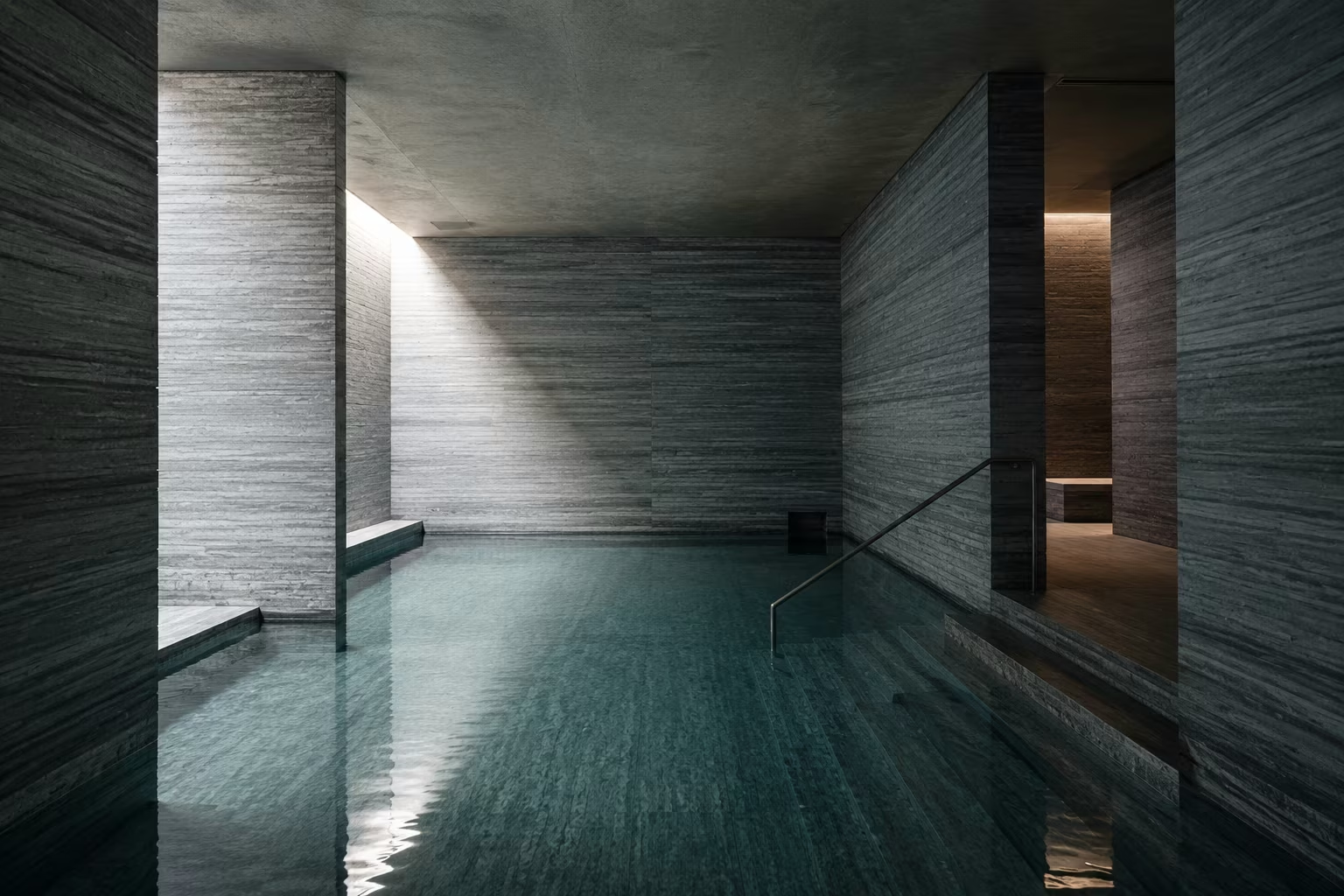
In architecture and spatial design, minimalism has always carried different weight. An interior can be minimal in furnishing without being minimal in cost or intention. Consider Peter Zumthor’s Therme Vals in Switzerland: the entire building is made of locally quarried Valser quartzite, stacked in horizontal courses that give the walls the texture of geological time. The pools are simple rectangles. The surfaces are stone, water, light. There is almost nothing decorative in the entire building, and yet the sensory experience is overwhelming. You feel the temperature of the water, the weight of the stone, the quality of the air. The emptiness is not empty at all. It is saturated with material presence.
This is the version of minimalism that I find most honest. Not the absence of things, but the concentration of attention. When John Pawson designs a house, the minimalism is not an aesthetic applied after the fact. It is structural. The proportions of the rooms, the depth of the window reveals, the grain of the plaster, the way light enters at different hours. Every element has been considered so intensely that nothing else needs to be added. The house is full, even when it looks empty.
Compare that with the typical “minimalist renovation” that floods real estate listings: white paint over every surface, engineered oak flooring, matte black hardware, a floating vanity, a rain showerhead. This is minimalism as a finish schedule. It strips a space of character and calls it clean. The bones of the building, the quality of the light, the relationship between inside and outside, none of that has been thought through. It is the visual equivalent of a blank page: not a poem, just the absence of one.
The difference between these two approaches is the difference between choosing silence and having nothing to say.
The Psychology of Clean Surfaces
Why does a clean, uncluttered room feel so good? The standard answer is about stress reduction and cognitive load, and that answer is correct but incomplete.
There is a deeper psychological mechanism at work. An uncluttered space gives you something rare in modern life: a sense of authorship. When you enter a room that has been stripped down to essentials, you feel that someone made choices. Each object is there for a reason. The space has been decided. And because our daily experience is saturated with things we did not choose (the pop-up ad, the notification, the fluorescent-lit corridor, the open-plan office with its visual chaos), a space where someone has exercised real editorial judgement feels almost luxurious in its restraint.
This is why the best minimalist interiors do not feel cold. They feel held. The Japanese concept of ma, the meaningful void between objects, is not about absence. It is about the space between things being as considered as the things themselves. When a room is designed with ma, the emptiness has shape. It has purpose. It creates room for your attention to rest.
I think this is also why minimalism appeals so strongly to people in periods of personal chaos. After a breakup, after a move, during a career crisis, the urge to strip everything back is almost physical. Throw out the clothes that no longer fit. Sell the furniture from the old apartment. Start again with less. The blank space becomes a kind of promise. You are not lost. You are starting over. You are making room.
What Gets Lost
The problem with minimalism, or at least with the way it is currently practised and promoted, is that it flattens the relationship between people and their objects.
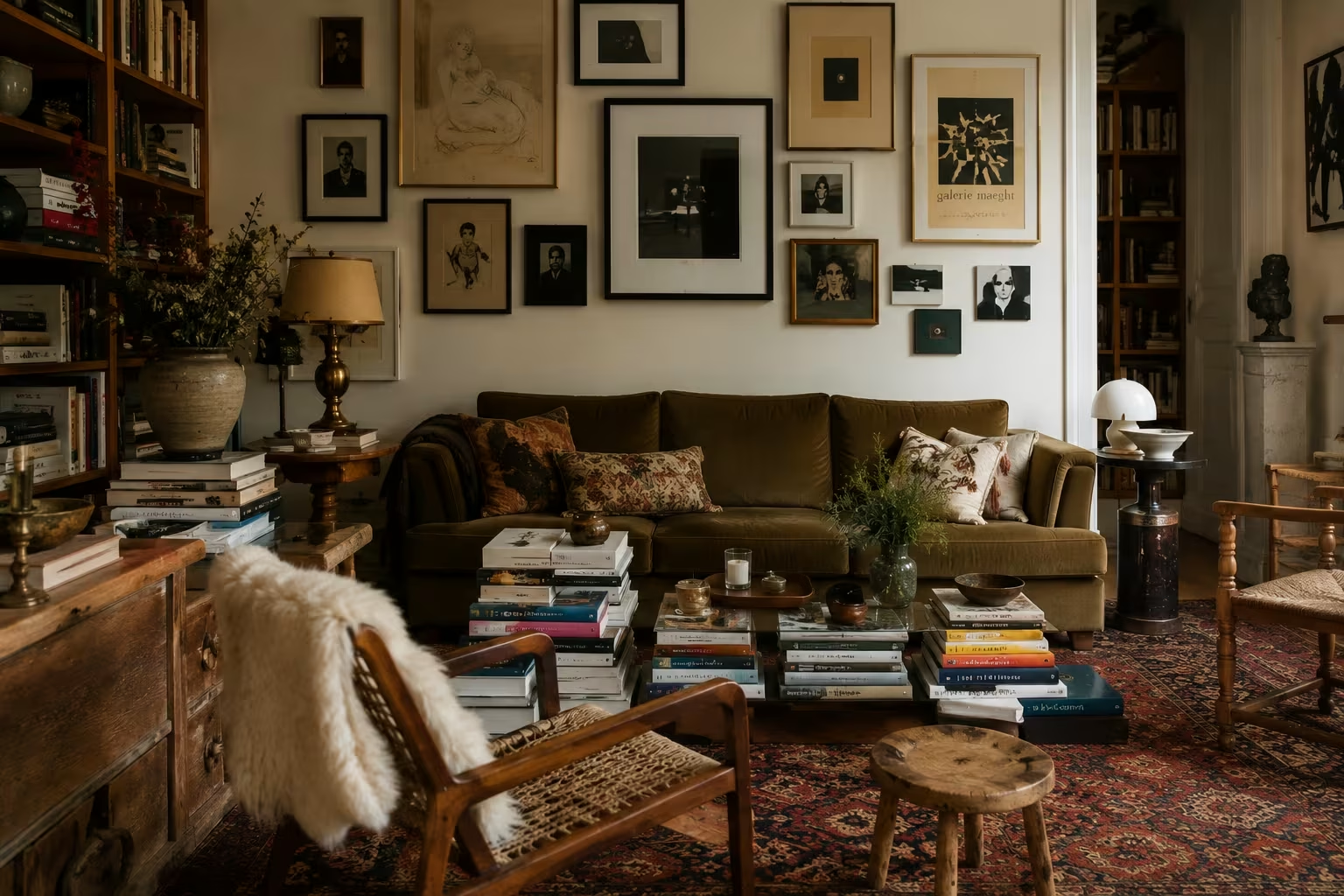
A home full of inherited furniture, mismatched ceramics, children’s drawings pinned to the fridge, second-hand books stacked in uneven piles, a carpet that does not match anything but was bought on a trip that mattered, that home tells a story. It is messy, visually incoherent, and deeply human. It contains evidence of a life being lived rather than a life being curated.
Minimalism, at its worst, treats those kinds of accumulations as a problem to be solved. The language is revealing: clutter, purge, declutter, simplify. These are words of contamination and cleansing. They imply that the things you own are a burden, and that freedom lies in shedding them. For some people, in some circumstances, that is true. But as a universal philosophy it is suspiciously convenient for a consumer culture that wants you to replace old things with fewer, more expensive new ones.
The “buy less, buy better” mantra deserves particular scrutiny. On the surface it is responsible advice. In practice it means: spend $300 on a single serving bowl instead of $15 on three. Buy one cashmere sweater for the price of five synthetic ones. The objects are better, certainly. They last longer. They photograph more beautifully. But the underlying structure of consumption has not changed. You are still defining yourself through what you own. You have just raised the price point.
There is also an unavoidable class dimension. Minimalism reads very differently depending on whether you chose it or had it imposed on you. A wealthy person with a sparse apartment full of Eames furniture and poured concrete floors is exercising taste. A person with very few possessions because they cannot afford more is not living a minimalist lifestyle. They are living with less than they need. The aesthetic overlap between these two situations is enormous, and the willingness of minimalist culture to gloss over that difference is one of its least attractive qualities.
What Minimalism Got Right
And yet, I find myself reluctant to dismiss it entirely. Because the core insight, stripped of its Instagram packaging and its DTC marketing, is sound.
We are surrounded by too much. Our homes are full of things we do not use, do not need, and do not particularly like. We buy on impulse and store out of guilt. We have kitchen drawers that have not been fully emptied in years. We have closets with clothes we will never wear again. The volume of objects in an average Western household has increased dramatically since the 1970s, and the quality of attention we give each one has decreased in inverse proportion.
Minimalism, at its best, is a correction. It asks the question that consumer culture would prefer you never consider: do I actually want this, or am I just acquiring it out of habit? That question, applied honestly, can transform not just a room but an entire relationship with material life. It is the question that separates a home from a showroom, a life from a lifestyle brand.
The trick is to hold the question without becoming dogmatic about the answer. Some people need more objects around them, not fewer. Some spaces are better for being full: a kitchen crowded with copper pots and ceramic jars, a study lined with books that go all the way to the ceiling, a living room where every surface holds something that someone made or found or was given. Maximalism done well is not excess. It is abundance with intention.
Living in the Tension
The most interesting interiors I have encountered recently do not belong to either camp. They are not minimalist and not maximalist. They are what I think of as edited. Someone has lived in a space long enough to know what matters to them, and they have had the discipline to let go of the rest, while also having the generosity to keep things that serve no function beyond meaning something.
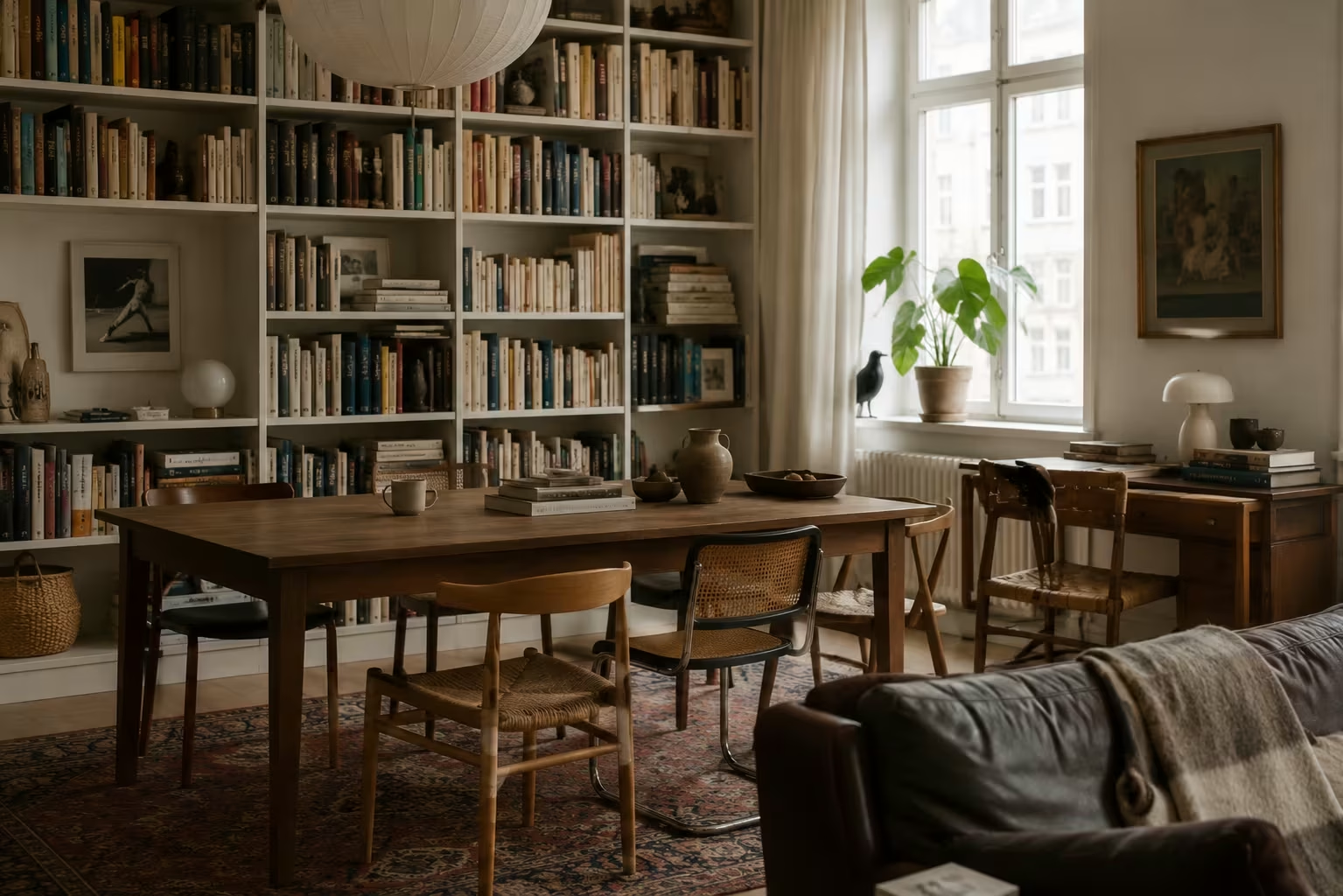
A room with a beautiful raw-edge timber dining table, twelve chairs that do not match because they were collected over twenty years, a wall of books in no particular order, and one painting that changes the temperature of the entire space. Is that minimal? Is that maximal? Neither word fits. It is just a room that has been lived in with care.
I suspect this is where the conversation is heading. The binary of minimal versus maximal has already begun to collapse into something more nuanced, something more human. People are tired of categories. They want homes that feel like theirs, not like an algorithm’s recommendation.
The real lesson of minimalism was never about owning fewer things. It was about paying attention to the things you own, and to the spaces between them. If you can do that with three objects, wonderful. If it takes three hundred, that is fine too.
The emptiness was never the point. The attention was.
Suzu Haruhi writes about design, architecture, and the things we live with. She is the editorial voice of Stubborn Home Design.
Keep Reading
From the Walkman to Wired Headphones in 2026: Why This Audio Design Never Dies
By Suzu Haruhi In 1979, Sony introduced the Walkman and changed the way people listened to music. For the first time, sound became private,…
Read article
Maximalism Is Back. But Was It Ever Really Gone?
I keep reading that maximalism is making a comeback. That the era of white walls and single-stem vases is over, and that we are…
Read article