Journal
How to Style a Living Room That Actually Feels Like Yours
How to Style a Living Room That Actually Feels Like Yours
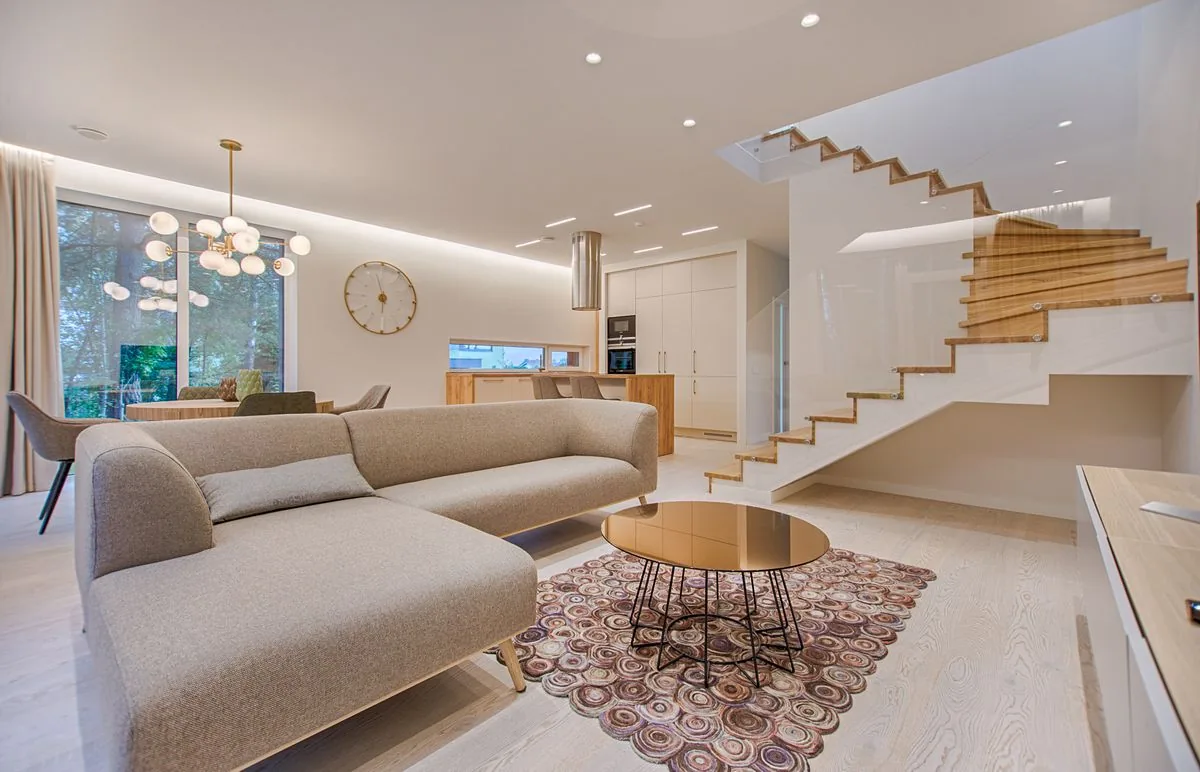
Most living rooms in Australia look like they were assembled by three different people who never spoke to each other. There is a sofa from one shop, a rug from another, and a cluster of objects on the coffee table that arrived in a single delivery box from a warehouse sale. The room has everything it needs and nothing that means anything.
Styling a living room is not about filling gaps. It is about making choices that reflect how you actually live, not how a catalogue suggests you should. The difference between a room that looks “done” and a room that feels like it belongs to someone is not budget. It is intention.
Start With How the Room Feels, Not How It Looks
Before you buy a single cushion, sit in the room. Not to check your phone. To notice what happens. Where does the light fall at 3pm? Which corner feels cold? Where do you naturally gravitate when you walk in?
The best living rooms are designed around sensation, not aesthetics. Charlotte Perriand understood this when she designed the interiors of Les Arcs in the French Alps. The materials were chosen for how they behaved in winter light, not for how they photographed. Timber that warms underfoot. Stone that holds the cold and releases it slowly. Wool that absorbs sound.
In an Australian living room, the same principle applies. A Melbourne terrace with bluestone floors and high ceilings needs a different approach than a Brisbane Queenslander with VJ boards and a verandah. The bluestone pulls heat out of the room in winter. The Queenslander breathes in humidity. Neither room can be styled the same way.
Start with the materials already in the room. The floor, the walls, the window frames. Work with them, not against them. If your floors are spotted gum, lean into the warmth. If your walls are rendered brick, let the texture be part of the story.
The Objects That Do the Heavy Lifting
A living room earns its character from the objects that sit between the furniture. Not the furniture itself. A sofa is a sofa. What happens around it is what makes the room yours.
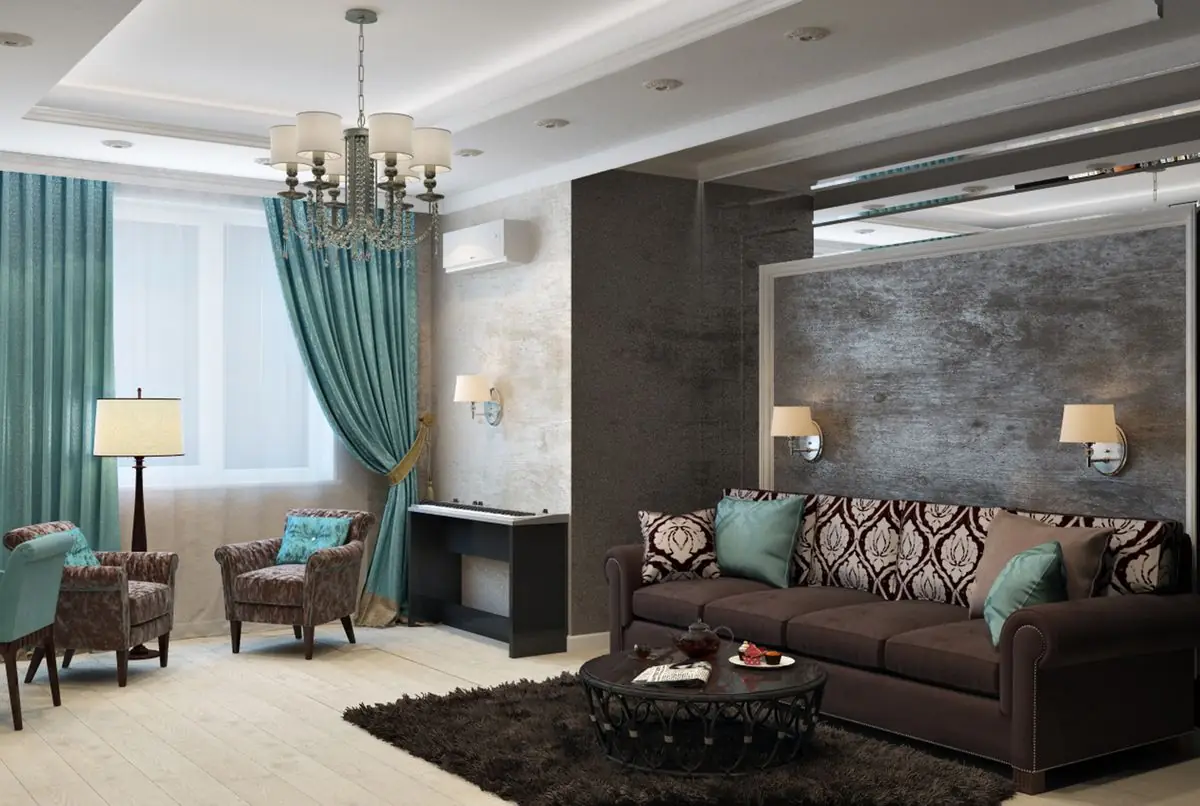
The best objects are the ones that do more than one thing. A vase that holds dried banksia but also catches the afternoon light when it is empty. A tray that organizes the coffee table but also creates a boundary between “lived in” and “chaotic.” A clock that tells time but also anchors a shelf arrangement the way a painting anchors a wall.
This is where most styling guides go wrong. They tell you to add “accessories.” What they mean is: buy more stuff. What you should do instead is choose fewer objects that carry more weight.
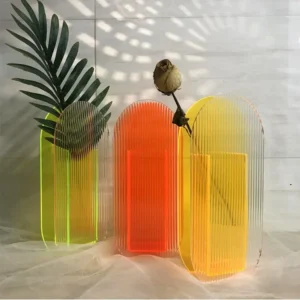
A modern ribbed acrylic vase with an arched silhouette does something that a generic ceramic pot does not. It fractures the light that passes through it. The ribbed texture catches shadows and throws them in lines across the surface it sits on. Even without flowers, it is an object that changes with the time of day. That is the difference between decoration and design.
Look at how Ilse Crawford approaches objects in her Studio Ilse projects. Every piece in a room is chosen for how it behaves, not just how it looks. A brass bowl that patinas over months. A linen throw that softens with every wash. A wooden tray that darkens where hands touch it most. These are objects that age with you.
Light Is Not a Background Player
Most Australian living rooms have one overhead light and maybe a floor lamp in the corner. This is like having one song on a playlist. It sets a single mood and keeps it there all evening.
Real lighting design is about layers. Not the “layering” that design magazines talk about, which usually means “put a throw on the sofa.” Actual layers of light that change how a room feels at different hours.
Ambient light is the base. It fills the room without drawing attention to itself. Task light is functional, the reading lamp beside the chair. Accent light is the one most people forget. It picks out a surface, a texture, a corner. It creates depth.
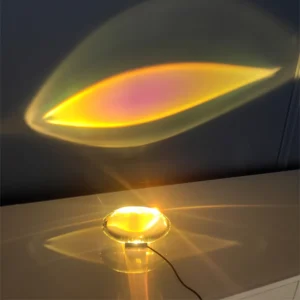
The Eye of the Sky crystal projection lamp is an accent light that does something most lamps cannot. It projects coloured light patterns across walls and ceilings through a crystal lens. The four interchangeable filters (warm white, sunset red, blue purple, multicolor) mean you can change the room’s atmosphere without moving a single piece of furniture. At 75mm tall, it sits on a shelf or side table and disappears into the arrangement during the day. At night, it transforms the wall behind it into a wash of colour that shifts as you move past it.
This is what Dieter Rams meant when he talked about good design being as little design as possible. The object is small, quiet, functional. The effect is the opposite. It fills the room.
In Australian homes, where open-plan living means the living room bleeds into the kitchen and dining area, accent lighting becomes even more important. It defines zones without walls. A warm glow on the coffee table says “this is where you sit.” A different colour temperature above the dining table says “this is where you eat.” The room reads as one space but functions as three.
The Australian Living Room Problem
Australian living rooms have a particular challenge that European and American rooms do not. They have to work in January and in July. They have to handle 38 degrees in Melbourne and 6 degrees in Melbourne, sometimes in the same week.
This means the room cannot be static. It needs to breathe. Heavy velvet curtains that trap warmth in winter become oppressive in summer. A dark colour palette that feels cozy in June feels suffocating in December.
The solution is not to go neutral and safe. It is to build a base that works year-round and add seasonal layers on top. A linen sofa in a warm grey takes a wool throw in winter and a cotton one in summer. Timber furniture works in both seasons. A terrazzo side table stays cool to the touch in January and holds warmth from a nearby heater in July.
Glenn Murcutt, Australia’s most important residential architect, designs houses that respond to the land and the climate. His corrugated steel roofs, his louvred walls, his deep eaves are all about letting the building breathe. Your living room can follow the same logic. Let air move. Let light change. Do not seal the room into one fixed state.
The other Australian challenge is space. Melbourne apartments, Sydney terraces, Brisbane workers’ cottages. These are not the sprawling living rooms of American suburban homes. They are rooms where every object has to earn its footprint.
Robson Rak, the Melbourne residential studio, solves this by treating every surface as a display opportunity. A shelf is not just storage. It is a composition. A console table is not just a dumping ground for keys. It is a vignette that changes with the seasons. This is how you style a small living room without cluttering it. You make every object count.
What to Stop Doing
The most common styling mistake in Australian living rooms is buying a matching set. The sofa, the armchair, the ottoman, all from the same range, all in the same fabric. This does not create a cohesive room. It creates a showroom.
The second mistake is treating the coffee table as a display surface for books you have never read. Three hardcover design books stacked with a candle on top is not styling. It is a cliché. If you want books on the table, make them books you actually open. If you want a candle, choose one for the scent, not the vessel.
The third mistake is ignoring the vertical plane. Most people style the horizontal surfaces (tables, shelves, the floor) and leave the walls as an afterthought. A single piece of art hung too high above the sofa. A clock in the wrong corner. The walls are the largest surface in the room. They deserve as much attention as the floor.
The fourth mistake is symmetry for the sake of symmetry. Two identical lamps on either side of the sofa. Two identical cushions on either side of the bed. Symmetry can work, but only when it serves a purpose. In a room with a strong central axis (a fireplace, a large window), symmetry reinforces the architecture. In a room without one, it creates a false formality that feels stiff.
Faye Toogood’s interiors are a masterclass in controlled asymmetry. Her Roly-Poly chairs sit in odd-numbered groups. Her sculptural objects are placed off-centre. The result is a room that feels alive, not staged. You can do the same thing with a simple shelf arrangement. Three objects of different heights, placed at different depths. Not random. Composed, but not symmetrical.
The fifth and most damaging mistake is buying everything at once. A room that is completed in a single shopping trip will always look like a room that was completed in a single shopping trip. The best living rooms are built over months and years. A lamp from a trip to Melbourne. A vase from a local market. A throw from a brand you discovered online. These objects carry stories. They create a room that feels lived in because it has been.
A living room is not a project to be completed. It is a space to be inhabited. The styling is just the beginning.
Shop Mentioned Pieces
Keep Reading
How to Style Photo Frames Without Making Your Walls Look Like a Storage Unit
How to Style Photo Frames Without Making Your Walls Look Like a Storage Unit Walk into any Australian home built in the last twenty…
Read article
How to Display Dried Flowers at Home Without Them Looking Like a Funeral
Dried flowers have a reputation problem. For decades, they meant one thing: dusty arrangements in your grandmother’s hallway, slowly turning grey, collecting cobwebs, smelling…
Read article