
Journal
From the Walkman to Wired Headphones in 2026: Why This Audio Design Never Dies
By Suzu Haruhi
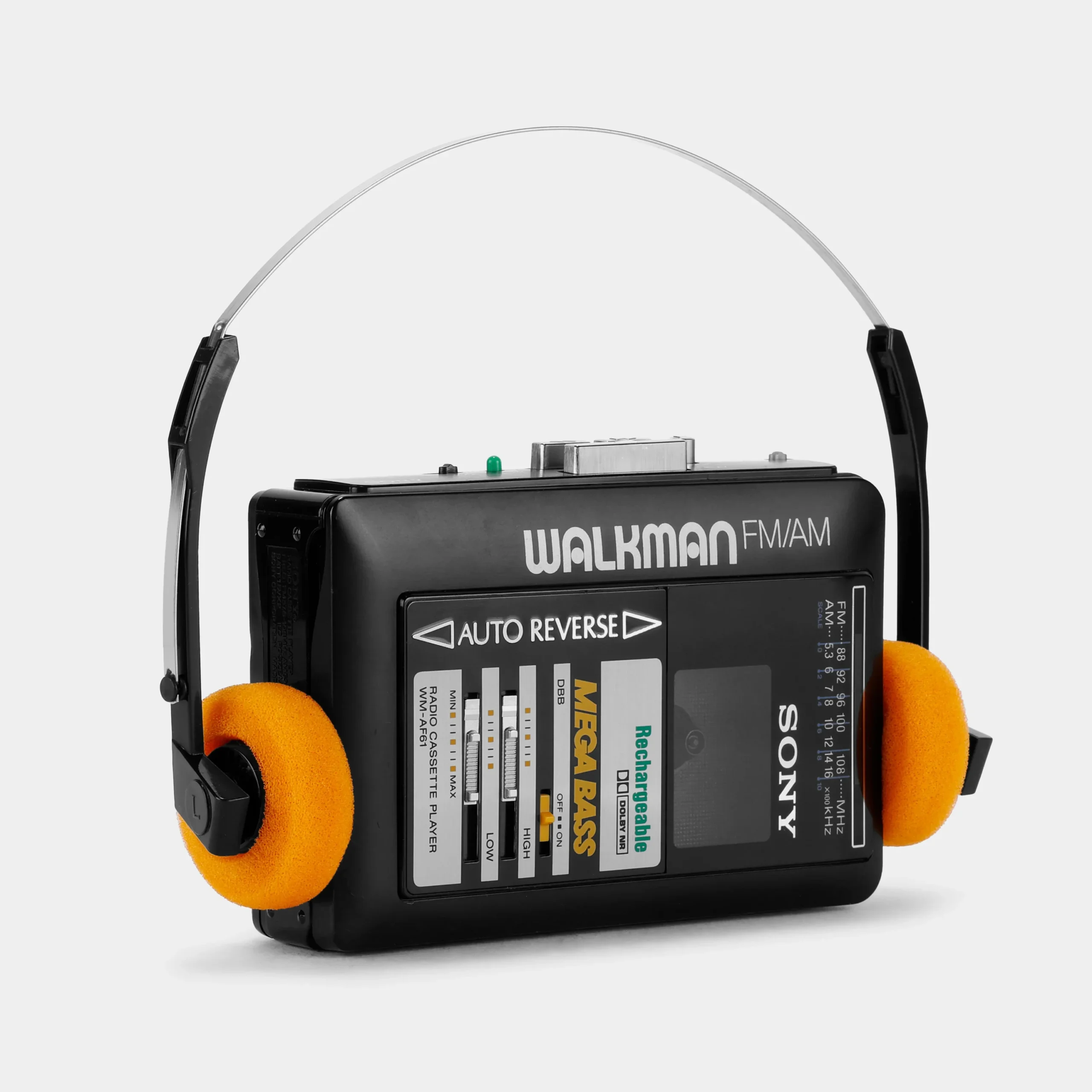
In 1979, Sony introduced the Walkman and changed the way people listened to music. For the first time, sound became private, portable, and personal. A cassette player could sit in a jacket pocket. A thin cable could run up to a pair of foam-padded headphones. The listener could move through the city with their own soundtrack.
Nearly five decades later, the technology around music has changed completely. Cassettes became CDs. CDs became MP3s. MP3s became streaming. Headphones became wireless, smaller, smarter, and more invisible.
And yet the wired headphone remains.
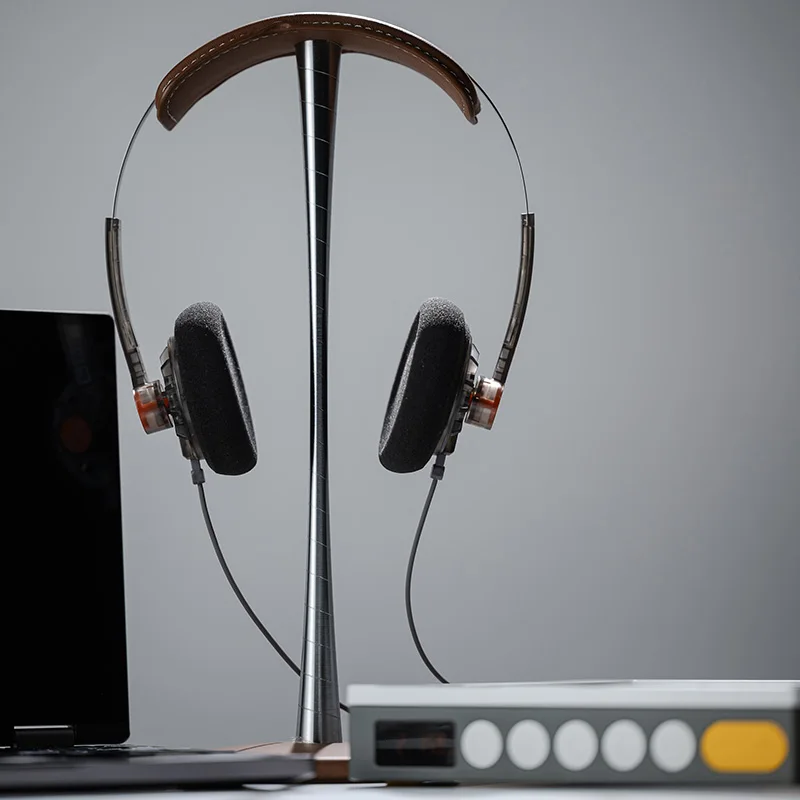
A pair of wired headphones still feels immediately understandable: two ear cups, a headband, a visible cable, and a direct connection to sound. The form is simple, functional, and strangely resistant to time.
This is not only nostalgia. It is durable design.
Why Wired Headphones Still Matter
Wired headphones have survived every major shift in personal audio. They survived the CD player. They survived the iPod. They survived streaming. They even survived the rise of wireless earbuds.
That survival says something important about design.
Some objects disappear when their technology becomes outdated. Others remain because their form still makes sense. Wired headphones belong to the second category.
The basic design is almost impossible to improve in a meaningful way. The human head has not changed. The position of the ears has not changed. The need for comfort, balance, sound isolation, and a stable connection has not changed.
Two ear cups. One headband. One cable.
It is a design shaped by the body, not by fashion.
The Design Language That Refuses to Age
Good industrial design does not try too hard to look new. It solves a problem clearly, then allows the solution to become familiar.
Wired headphones are a perfect example. Their visual language is built from necessity.
The headband exists because the headphones need to rest on the head. The ear cups exist because the sound needs to sit close to the ears. The padding exists because comfort matters. The cable exists because the sound needs a physical path.
Nothing is mysterious. Nothing is hidden for effect. The object explains itself.
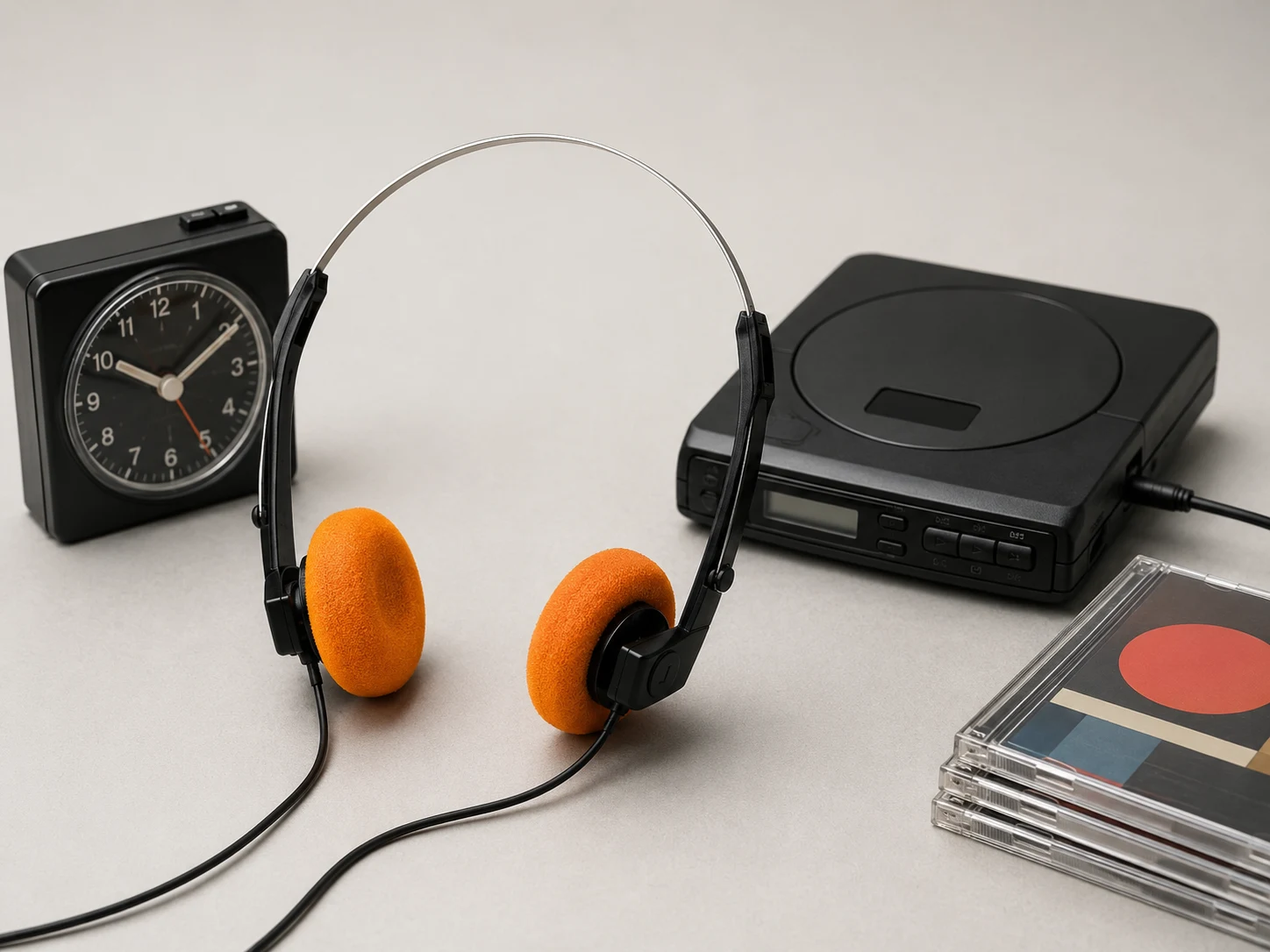
That is why wired headphones still look good on a desk, a shelf, or beside a CD player. They are not only audio equipment. They are objects with a clear shape, a clear function, and a clear relationship to the person using them.
Nostalgia Is Only Part of the Story
It is easy to describe the return of wired headphones as nostalgia. For some people, that is true. A pair of wired headphones can recall a Walkman, a Discman, a school commute, a bedroom stereo, or a stack of CDs.
But nostalgia does not explain everything.
Many younger listeners who choose wired headphones did not grow up with cassette players. They are not returning to a past they experienced. They are discovering a type of object that feels more physical, more visible, and more deliberate than wireless audio.
A wireless earbud is small, sealed, and almost invisible. It disappears into the ear. It hides its construction. It depends on batteries, software, charging cases, and invisible connections.
A wired headphone is different. The cable is visible. The ear cups are visible. The headband is visible. The object has presence.
It does not disappear into the background. It becomes part of the room.
The Cable as a Design Element
The cable is the reason many people moved away from wired headphones. It tangles. It catches. It limits movement.
But from a design perspective, the cable is also what gives wired headphones their character.
A cable creates a visible relationship between object and source. It connects the headphones to a CD player, a laptop, a turntable, or a small audio device. It makes listening feel physical again.
On a desk, a visible headphone cable adds a graphic line. It can curve across timber, coil beside a notebook, or fall naturally over the edge of a table. No wireless product can create the same visual rhythm.
The cable is not just a technical detail. It is part of the object’s identity.
Wired Headphones as Interior Objects
Retro audio has become more than a listening category. It has become part of interior design.
A CD player on a shelf. A pair of wired headphones on a desk. A stack of albums beside a lamp. These objects bring a different feeling into a room. They are tactile, readable, and visually warm.
In a home filled with flat screens and sealed devices, wired headphones offer contrast. They have curves, padding, texture, and a visible connection. They look like something made to be used, not hidden.
This is why they work especially well in modern interiors. They soften a workspace. They add character to a shelf. They make a listening corner feel intentional.
A pair of retro wired headphones can sit comfortably beside books, timber, ceramics, a desk lamp, or a compact CD player. The result feels personal rather than purely decorative.
The Industrial Design Behind the Object
Wired headphones follow one of the oldest principles of good design: form follows function.
The shape is not arbitrary.
The headband curves because the head curves. The ear cups are padded because ears need comfort. The cable is flexible because the listener moves. The jack exists because the sound needs a direct physical connection.
Every major part has a purpose.
That is why the object continues to feel honest. It does not pretend to be something else. It does not need to be hidden inside a charging case. It shows how it works.
This is also why wired headphones pair so well with other honest objects: timber desks, metal lamps, mechanical clocks, paper books, compact audio players, and simple storage pieces.
They belong to the same family of design: objects that reveal their function rather than disguising it.
Modern Wired Headphones Are Not Old Technology
The look may reference the past, but modern wired headphones are not simply old products repeated.
Today’s versions can use lighter materials, improved drivers, softer padding, better cables, and cleaner finishes. The design language remains familiar, but the comfort and performance can be much better than older models.
That combination is important.
The appeal is not about pretending to live in 1985. It is about keeping the best part of the old design while adapting it to the present.
A good pair of wired headphones in 2026 can feel retro without feeling outdated. It can suggest the Walkman era without becoming a costume piece.
How to Style Wired Headphones at Home
Wired headphones work best when they are treated as part of a room, not as clutter.
Place them on a desk beside a compact audio player, a notebook, and a warm lamp. Let the cable rest naturally instead of hiding it. Pair them with timber, metal, paper, and other tactile materials.
On a shelf, they can sit beside books, CDs, small speakers, or design objects. In a bedroom, they can make a bedside table feel more personal. In a home office, they add softness and character to an otherwise digital setup.
The key is restraint.
Do not over-style the scene. A pair of headphones, one audio device, and one or two surrounding objects are enough. The beauty of wired headphones is that they already explain themselves.
Why the Walkman Shape Still Matters
The Walkman did more than popularise portable music. It created a visual language for private listening.
A small device. A pair of headphones. A cable. A person moving through the world with sound.
That language is still recognisable today. Even when the cassette has disappeared, the idea remains powerful.
Wired headphones preserve that relationship. They make listening feel intentional. You plug them in. You sit down. You choose what to hear. The action is simple, but it changes the mood of the moment.
Wireless audio is convenient. Wired audio is deliberate.
That difference is why the form continues to matter.
Why This Audio Design Never Dies
Wired headphones continue to survive because they are not only a piece of technology. They are a form.
Technologies become obsolete. Forms endure when they are rooted in human needs that do not change.
The need to hear clearly.
The need to feel connected to an object.
The need for tools that show what they do.
The need for design that feels physical in an increasingly invisible digital world.
The Walkman gave music movement. Streaming gave music abundance. Wireless audio gave music convenience.
But wired headphones still offer something different: a physical relationship with sound.
That is why this design never really disappears. It waits, quietly, on a desk or shelf, until someone rediscovers the pleasure of plugging in.
The next time you see a pair of wired headphones on someone’s desk, do not assume they are avoiding new technology. They may have chosen a better relationship with sound.
Keep Reading

The Emptiness We Chose: What Minimalism Really Tells Us About How We Live
Minimalism has become one of the defining aesthetics of the twenty-first century, and yet the word itself has lost almost all meaning. A deep…
Read article
Maximalism Is Back. But Was It Ever Really Gone?
I keep reading that maximalism is making a comeback. That the era of white walls and single-stem vases is over, and that we are…
Read article